

Introducing the 6th annual edition of The In-House Barometer.
This year, we surveyed over 1000 marketing professionals and decision-makers from both in-house agencies and companies that rely on external agencies.
Download the report
For years, the in-house conversation focused on one question: should companies build more marketing capability inside?
That question now feels slightly out of date.
Most companies already have internal creative, strategic or operational resources. Some have built clearly defined agencies or studios. Others have assembled much the same capability one role at a time without ever formally deciding that they were building an in-house setup.
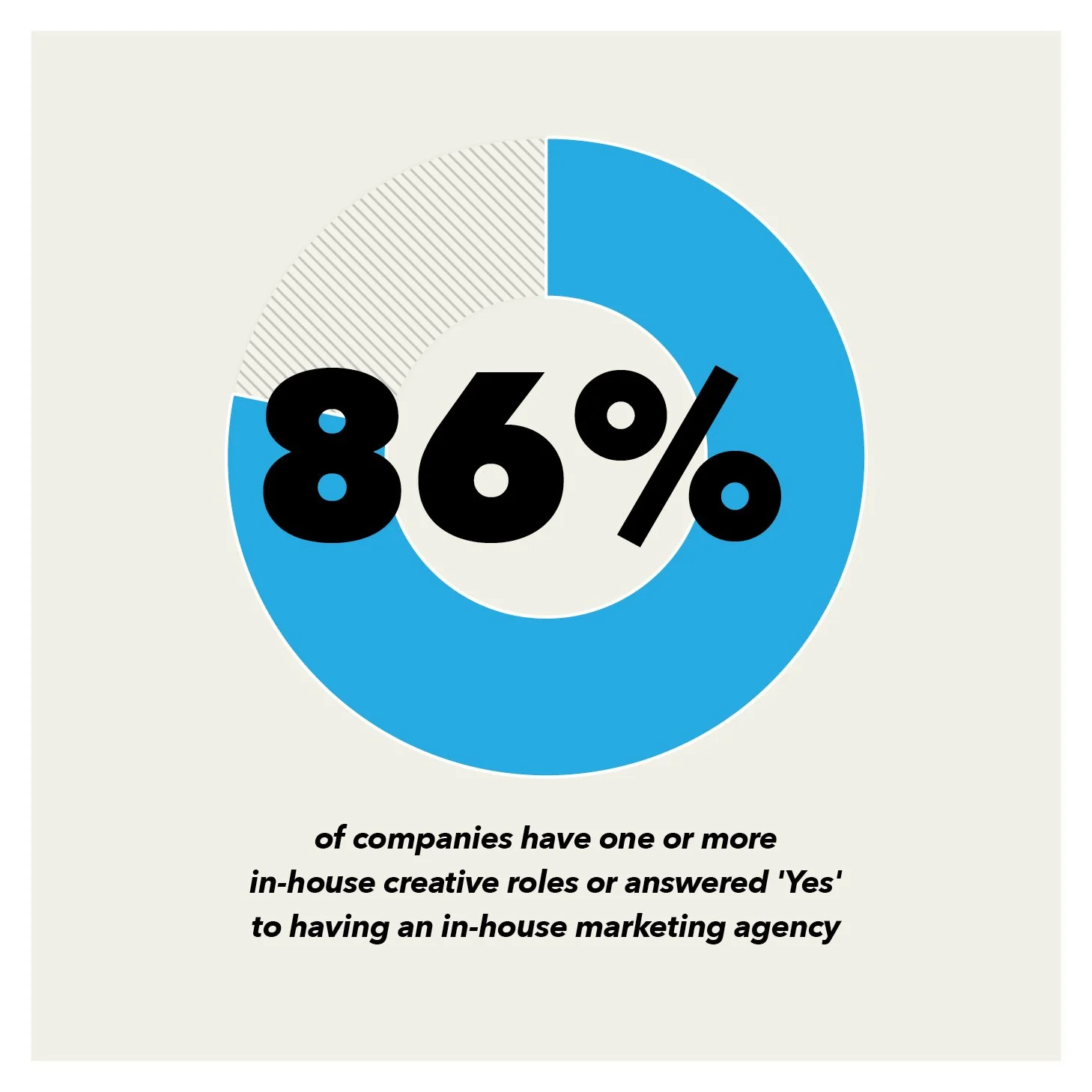
In 2026, 86% of respondents work in organisations with internal in-house resources. Four in five in-house setups have now been operating for more than three years, and almost half for more than five. In-house is no longer an experiment at the edge of marketing. It has become part of the infrastructure.
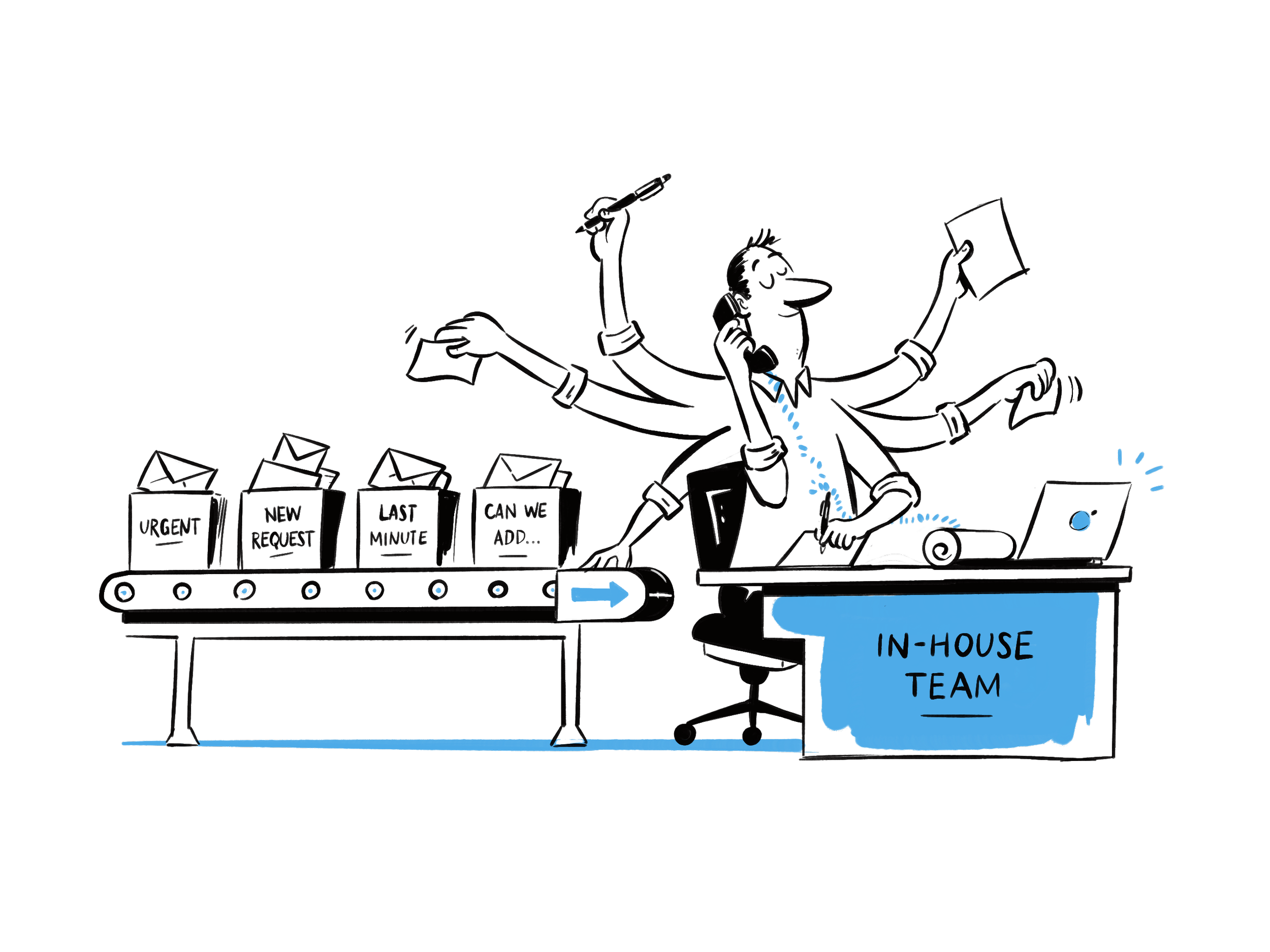
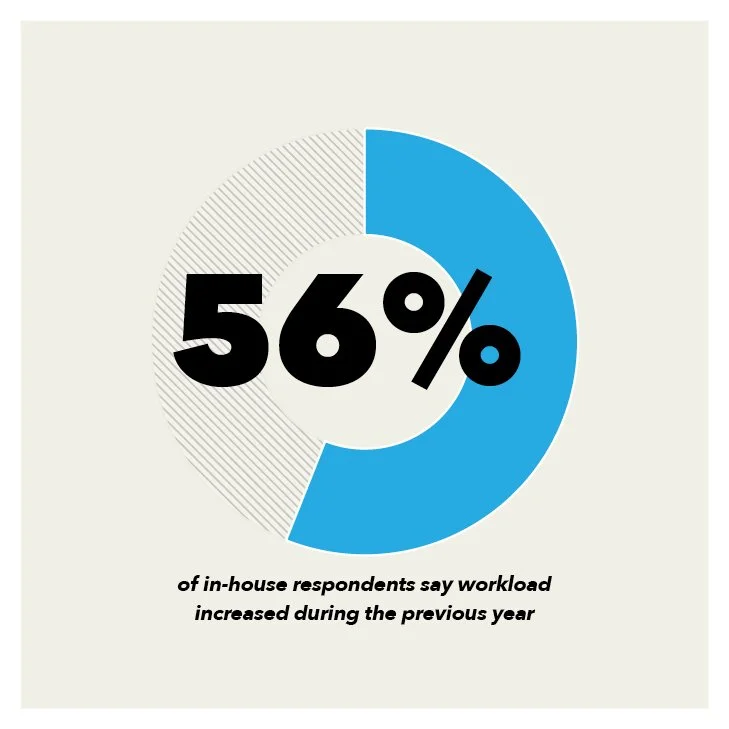
This year, 56% of in-house respondents say workload increased during the previous year, and 39% of in-house work was not part of the original plan. Many teams are no longer managing occasional campaigns. They are managing a continuous flow of strategic work, production, adaptations, specialist assignments and urgent requests. At that point, talented people are no longer enough. The organisation needs to decide what the team is there to do, how work enters, who determines priority, which assignments deserve protected strategic attention and which should move through a different production route. It also needs to decide where permanent internal capability creates an advantage and where agencies, freelancers, offshore resources, specialist partners or technology create greater value. And this is where one of the most interesting findings in the study appears. Operations is becoming a leadership discipline in its own right.
The same pattern appears in the relationship between in-house and external agencies.
The growth of internal capability has not produced the wholesale replacement of agencies that some predicted. Almost half of organisations with in-house resources continue to use external partners, and the proportion is even higher among larger companies. That is not evidence that in-house has failed. It is evidence that the model is evolving.
The strongest organisations are becoming more deliberate about what they own and what they access. They retain the knowledge, judgement and accountability that benefit from being close to the business, while using external partners where specialist expertise, perspective, flexibility or scale creates greater value.
The work is increasingly hybrid. The ownership of the system is increasingly internal. This is what we mean in this report when we talk about in-house orchestration. It is more than coordinating suppliers or moving tasks around a workflow. It is the capability to decide what should be made, where it should be made, who should contribute, how technology should be used and how all of those contributions remain part of one coherent marketing system. That may be the fourth generation of in-house.
The first generation brought production closer to the business. The next expanded into content and always-on marketing. Then creative leadership, strategy and judgement began moving inside. The next phase is about learning how to orchestrate the complete system at scale. And that brings us back to maturity.
The mature in-house organisation is not the one that can make everything itself. It is the one that can make clear decisions about what should be made, who should make it, what should not be made and how the complete system creates value.
That changes the question. The interesting question is no longer whether in-house works. It is what happens once the organisation begins to depend on it.
And perhaps the most important conclusion from this year’s Barometer is that maturity is not the age of the team. It is the quality of the choices around it.
A team can have existed for ten years and still operate through informal requests, unclear priorities and a constant production queue. A newly established team can have a clear mandate, protected strategic time, strong operational leadership and a deliberate model for deciding what happens internally and what should happen somewhere else.
The same applies to size. More people do not automatically create a more evolved setup. A large internal agency can still be reactive. A smaller team can create greater value by retaining the right knowledge, making clear choices and knowing when to use external expertise. This distinction runs through almost every finding in the report.
In-house has succeeded because it solved real business problems. It made marketing faster, brought knowledge closer to the business, improved continuity and reduced unnecessary handovers. But success also creates demand. Once an internal team proves that it can deliver, more people discover it. More assignments arrive. More disciplines move inside. Expectations grow.
Among larger organisations with in-house resources, 43% now have an Operations Director, compared with 29% of smaller organisations. That gap tells us something important about what happens when in-house reaches scale. More people also mean more briefs, more internal clients, more partners, more tools and more approvals.
Creative leadership protects the quality of the work. Strategy leadership connects it to the business problem. Operations leadership protects the system around it. It makes capacity visible, creates rules around intake and prioritisation, manages the mix of permanent and flexible resources and helps decide which work should move through which part of the ecosystem.
That is a significant shift. Operations is no longer simply project administration around the creative work. As complexity grows, it becomes part of the capability that allows good creative and strategic work to happen at scale.

The mature question is therefore no longer simply: can we do this in-house? It is: should we? AI makes that question even more important. The technology has made it remarkably easy to demonstrate what is possible. A headline, an image, a film, a research summary or dozens of campaign variations can be created in minutes. But there is a considerable distance between an impressive demonstration and an operating model that can use AI repeatedly across a large organisation.
Someone still has to decide which tools are approved, which information can be used, what is accurate, what is compliant, what belongs to the brand and what deserves to be produced at all. As output becomes easier to create, selection, quality control and judgement become more valuable.
That is why the most interesting AI story in this report may not be AI itself. It is the organisation being built around it.
